
Compartment pressure testing
Compass UniversalHgCompartment pressure, measured in seconds
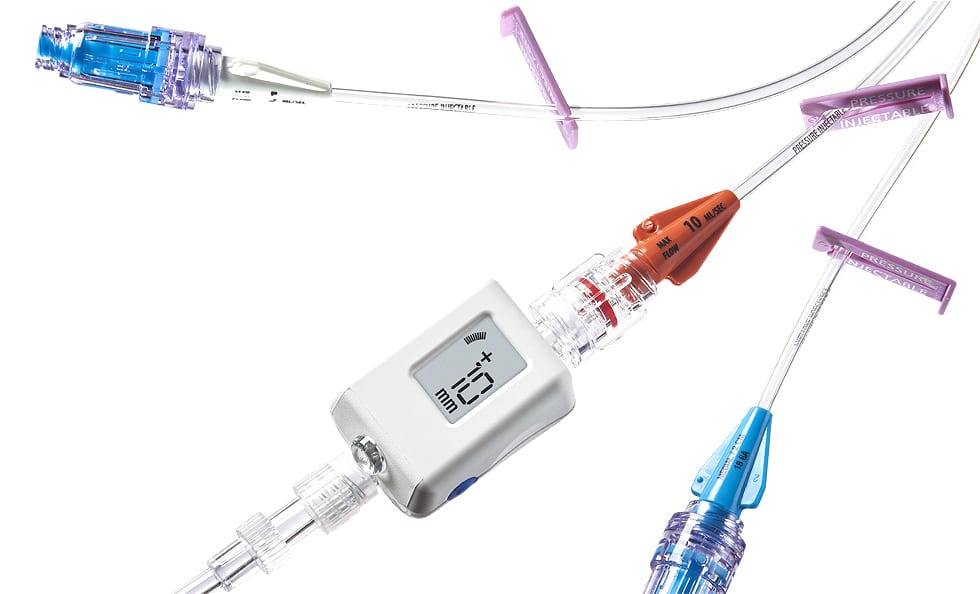
A sterile, single-use digital transducer that reads intracompartmental pressure precisely at the bedside — so the decision to fasciotomise is made on a number, not a delay.
Seconds
Time to a digital pressure reading
−199 to 999
Display range in mmHg
Single use
Sterile, disposable — no reprocessing
8 hours
Continuous operating life once activated
TGA-listed devices
Erchonia systems supplied in Australia are listed on the ARTG by the sponsor.
Evidence-led
Device claims reference published clinical studies, not marketing copy.
Used in Australian clinics
Supplied to physiotherapy, podiatry and chiropractic practices nationally.
Secure checkout
Payment is completed on the encrypted RehaCare store.
Precise pressure, made simple
When a crush injury, a motor vehicle accident or a sports injury arrives, the question is the same: does this patient have compartment syndrome? Confirming it quickly and confidently is where most services struggle. The capital manometer is unavailable or locked away, the consumable components attached to it have expired, and the orthopaedic registrar is scrubbed into a scheduled case. Each of those frictions adds minutes to a diagnosis measured in muscle.
Compass removes the equipment problem entirely. It is a self-calibrating, single-use, sterile pressure transducer with an integrated digital display, indicated for the measurement of physiological pressure. It lives on the shelf in its pouch, needs no charging, no calibration schedule and no reprocessing, and it attaches to the needle and syringe the clinician already prefers.
The result is a direct numerical reading in mmHg within seconds of insertion — simple, documentable and hard to dispute — supporting the assessment of both acute compartment syndrome following trauma or surgery and chronic exertional compartment syndrome arising from repeated activity.
Designed for early, accurate measurement
A self-calibrating disposable transducer with an integrated digital display gives an unambiguous intracompartmental pressure number at the bedside — no manometer column to interpret and no analogue estimation.
Nothing to book, unlock or service
Because Compass is a sterile single-use item stored on the shelf, there is no shared capital device to locate, no charging, no calibration schedule and no expired consumable set attached to a machine.
Works with what is already in the tray
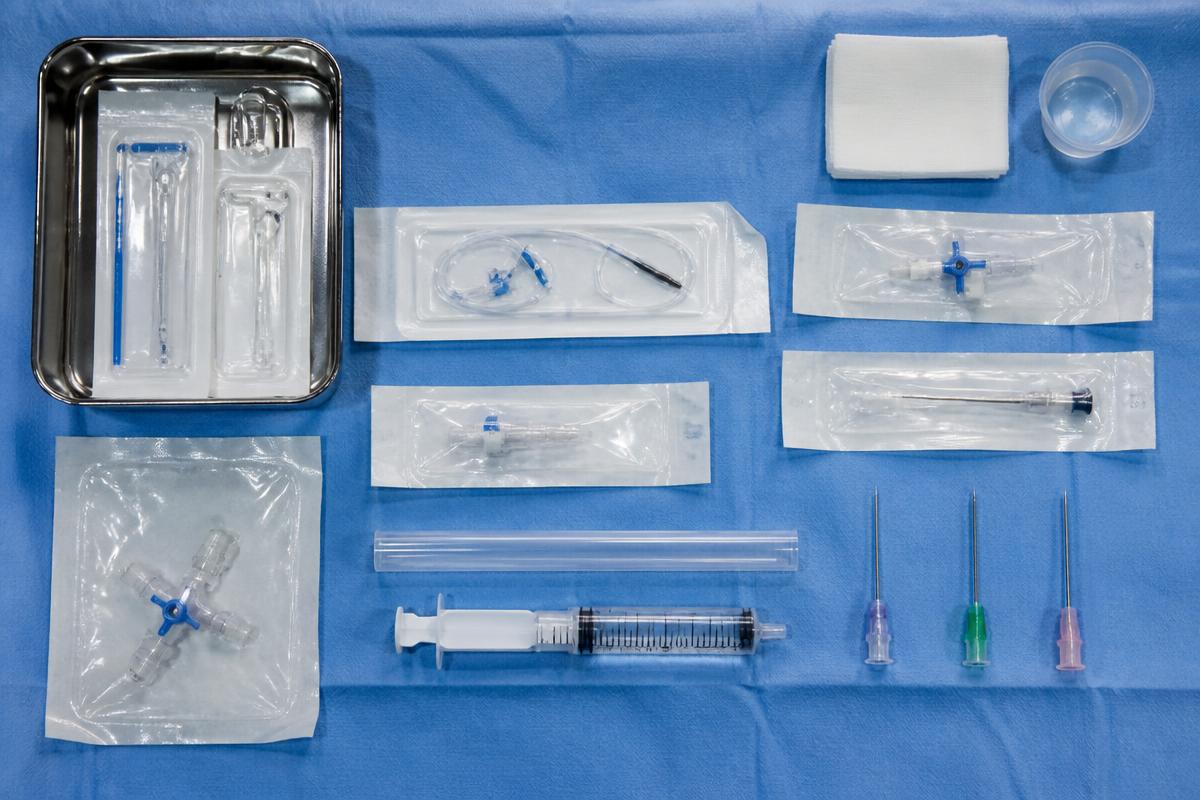
Compatible with almost all syringes, any gauge needle and all luer connections, so the department does not need to standardise on a proprietary needle or tubing kit.
Faster and less expensive than legacy methods
It replaces the arterial line transducer, tubing, saline setup and monitor time used in improvised needle manometry, and removes the consumable stack that traditional handheld systems require.
The cost of a delayed call
You suspect compartment syndrome. Are you 100% sure?
Delays and misdiagnosis have consequences in both directions. Nerve and muscle death follows an unrecognised compartment syndrome within hours; an unnecessary fasciotomy leaves a young patient with a lifelong scar and a preventable complication profile. Both errors are more likely when the decision rests on clinical impression alone.
16.1%
lower rate of amputation
in patients receiving an early fasciotomy
7.9%
lower rate of infection
in patients receiving an early fasciotomy
Shorter
hospital length of stay
significantly reduced with early intervention
55%
of acute compartment syndrome claims find for the patient
with litigation damages averaging USD $426,000
Figures reported in the Compass clinical literature published by Centurion Medical Products. References available on request. Compass® is a registered trademark of Mirador Biomedical, Inc., a subsidiary of Centurion Medical Products Corporation.
From pouch to pressure reading
The published instructions for use run to five short steps. Clinical technique, site selection and threshold interpretation remain the responsibility of the treating clinician.
01
Open and inspect
Remove Compass from its sterile pouch. The device is sterile only while the pouch is unopened and undamaged; it is single use and must not be resterilised or reused.
02
Assemble
Attach the clinician's chosen needle and syringe using the standard luer connections. No transducer cable, no external monitor and no fluid-filled tubing run is required.
03
Self-calibrate
The device zeroes itself on activation. Light sensitivity is under 1 mmHg and zero drift is ±1 mmHg per four hours, so the reading holds through serial checks.
04
Measure the compartment
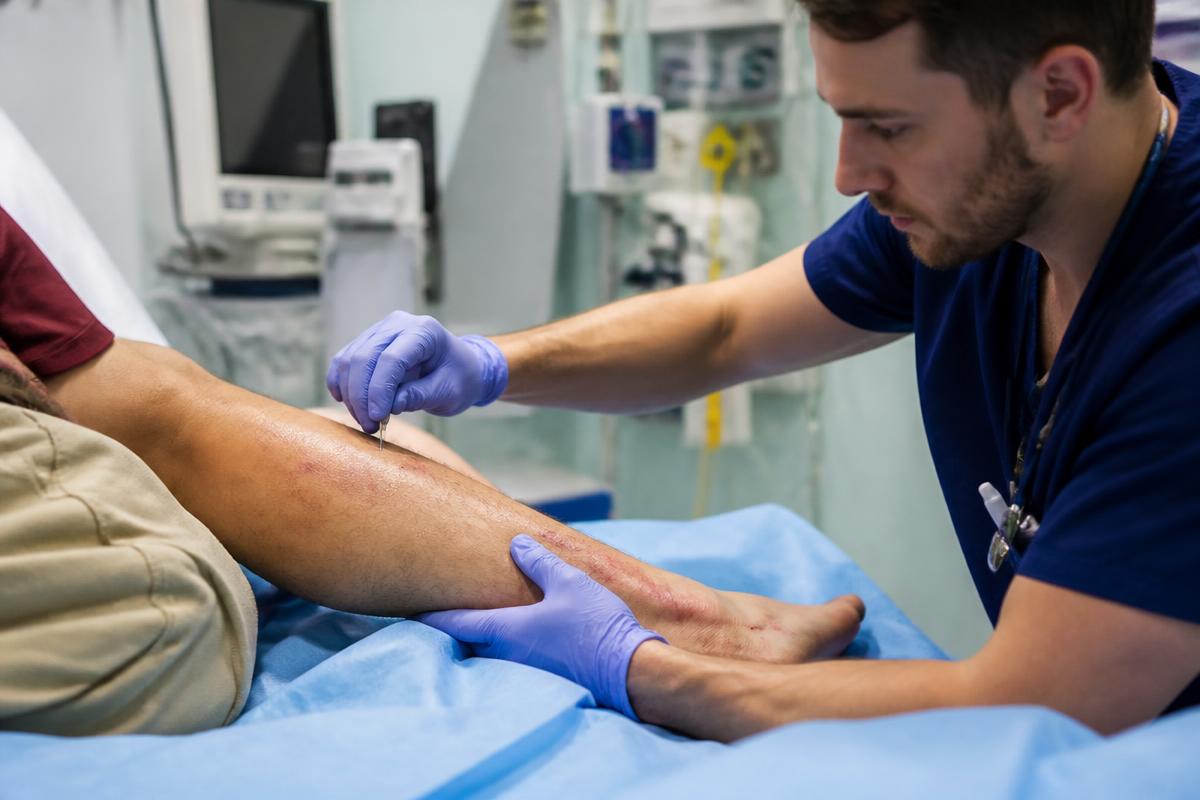
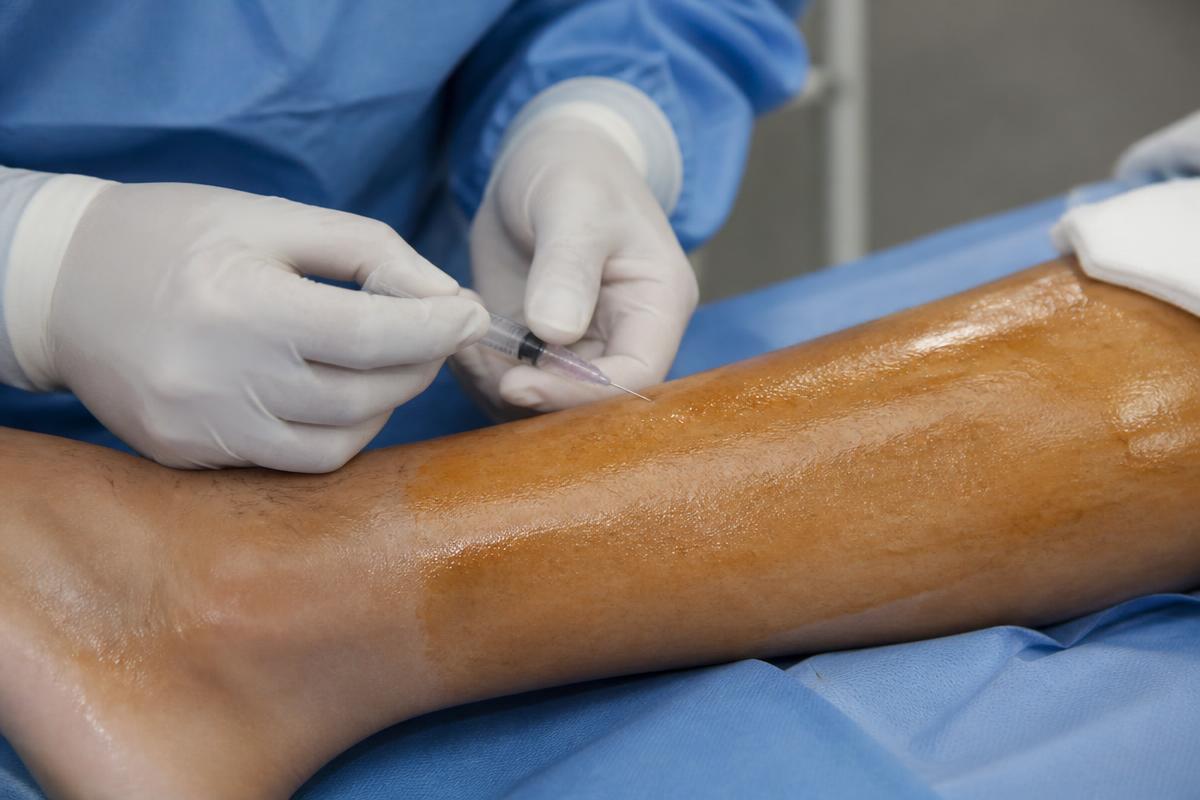
Insert into the compartment under the clinician's usual technique and read the pressure directly from the digital display in seconds.
05
Repeat or document
Serial measurements across compartments and over time are recorded from the same display. The device remains operational for eight hours from activation.
Important: the device is sterile only while the pouch is unopened and undamaged. It is designed for single use — do not resterilise or reuse. Review the information for use supplied with the product before every case.
Compass versus traditional measurement
Most Australian departments measure compartment pressure either with an improvised arterial line transducer setup or with a shared handheld manometer and its proprietary consumables. Here is how a disposable digital transducer changes each step.
| Criterion | Compass UniversalHg | Traditional setup |
|---|---|---|
| Setup | Open pouch, attach needle and syringe | Arterial line transducer, tubing, saline flush, monitor zeroing |
| Availability | Stored on the shelf, ready at the bedside | Shared capital device — located, unlocked and often in use |
| Reading | Direct digital value in mmHg | Monitor waveform or analogue scale requiring interpretation |
| Consumables | Self-contained; no proprietary kit to expire | Multiple consumable components with separate expiry dates |
| Infection control | Sterile, single patient use, discarded after the episode | Reusable handset requiring reprocessing between patients |
| Needle compatibility | Any gauge needle, almost all syringes, all luer connections | Frequently locked to a proprietary side-port needle set |
Specifications
Published manufacturer specifications for the Compass disposable pressure transducer.
- Pressure range (measurement)
- −500 to +500 mmHg
- Display range
- −199 to +999 mmHg
- Accuracy < 50 mmHg
- ±2 mmHg
- Accuracy 50–100 mmHg
- ±3 mmHg
- Accuracy 100–300 mmHg
- ±5 mmHg
- Accuracy > 300 mmHg
- ±10 mmHg
- Zero drift
- ±1 mmHg per 4 hours
- Operating life
- 8 hours
- Operating temperature
- 15 to 40 °C
- Storage temperature
- −29 to 49 °C
- Light sensitivity
- < 1 mmHg
- Battery
- 3 V lithium (internal, sealed)
- Digital display
- Yes — integrated
- Reusable or disposable
- Disposable, single use, sterile
- Latex free
- Yes
- Catalogue number
- CCMP001 (Compass compartment pressure)
- Universal SKU
- CUHG1-INT (Compass UniversalHg)
- HPIS code
- 999_140_20_0
- UNSPSC
- 44121600
Display error codes
If the display shows one of the following codes, the device should not be used for measurement.
- SFSoftware failure
- HFHardware failure
- PFPressure sensor failure
- bFBattery failure
- EEEnvironmental error — outside operating temperature
- CECalibration error — outside required accuracy
Where it is used
Emergency departments
Confirm or exclude acute compartment syndrome at triage-to-decision speed when a crush injury, high-energy fracture or vascular event presents, without waiting on an orthopaedic review to bring equipment.
Orthopaedic and trauma theatres
Objective intracompartmental measurement before, during and after fixation of tibial and forearm fractures, and to document compartment pressures where clinical signs are masked by regional anaesthesia.
Intensive care
Serial measurement in sedated, intubated or obtunded patients where pain out of proportion and the classic clinical signs cannot be elicited.
Sports medicine
Pre- and post-exertional testing in the assessment of chronic exertional compartment syndrome, where the diagnosis depends on a measured pressure change rather than symptoms alone.
Paediatrics
Supports assessment in children where reliable pain reporting is limited and analgesia requirement is often the earliest indicator.
Retrieval and rural services
A shelf-stable, battery-contained device suits sites without a maintained capital manometer or a resident orthopaedic service.
Frequently asked questions
What is the Compass UniversalHg?
A sterile, single-use disposable pressure transducer with an integrated digital display, indicated for the measurement of physiological pressure. In orthopaedics and emergency medicine it is used to measure intracompartmental pressure when compartment syndrome is suspected. Compass is a registered trademark of Mirador Biomedical, a subsidiary of Centurion Medical Products.
Does it need calibration or servicing?
No. The device is self-calibrating on activation and is discarded after use, so there is no calibration register, no service contract and no capital asset to maintain.
Which needles and syringes can be used?
Compass is compatible with almost all syringes, any gauge needle and all luer connections. Needle choice and insertion technique remain at the clinician's discretion.
Can the same device measure several compartments?
The device has an eight-hour operating life from activation and can be used for serial readings within a single patient episode. It is single-patient use and must not be reused or resterilised.
What pressure threshold indicates compartment syndrome?
Threshold interpretation is a clinical decision. Most services use either an absolute intracompartmental pressure or a delta-P value (diastolic blood pressure minus compartment pressure) against their own protocol. Compass supplies the measurement; it does not make the diagnosis.
Is it available in Australia and New Zealand?
Yes. RehaCare supplies Compass across Australia and New Zealand, with stock held locally. Contact us for pricing, box quantities, evaluation units and in-service training.
How is it packaged?
Supplied sterile in individual pouches. Standard export packing for the CUHG1-INT SKU is five units per box. Contact RehaCare for current Australian pack and case configurations.
Request pricing or an in-service
RehaCare supplies Compass across Australia and New Zealand with stock held locally. Tell us your department and volume and a representative will come back to you with pack pricing, evaluation units and in-service training.
- Department and health service pricing
- Evaluation units for trial before standardising
- In-service training for ED, theatre and ICU staff
- Consolidated ordering through your existing RehaCare account
Prefer to order online? View Compass UniversalHg on shop.rehacare.com.au